
Split
the English edition of «flotar de espaldas»

The day I turned twenty-eight I was exactly two thousand five hundred and forty-five kilometres from the place where I was born, and I was alone. Since I’d given up on my thesis, the situation at my mother’s house had become unbearable so I decided to leave with the excuse of wanting to learn a new language. My mother, who had by then lost all hope of seeing me achieve anything with my life, breathed a sigh of relief. She could at last salvage her standing among the neighbours.
I picked a country where I would be incapable of communicating, to stop myself from unravelling. Once there I barely did anything. Instead of studying, I’d sit in a park, watching through a ghostly haze as a group of winos passed around bottles. Ripping through the magnetic field between us, new mothers would walk by, pushing their sleeping babies in prams without even noticing us. I analysed the little group’s behaviour with morbid curiosity and a hint of envy from my bench. They never once returned my gaze.
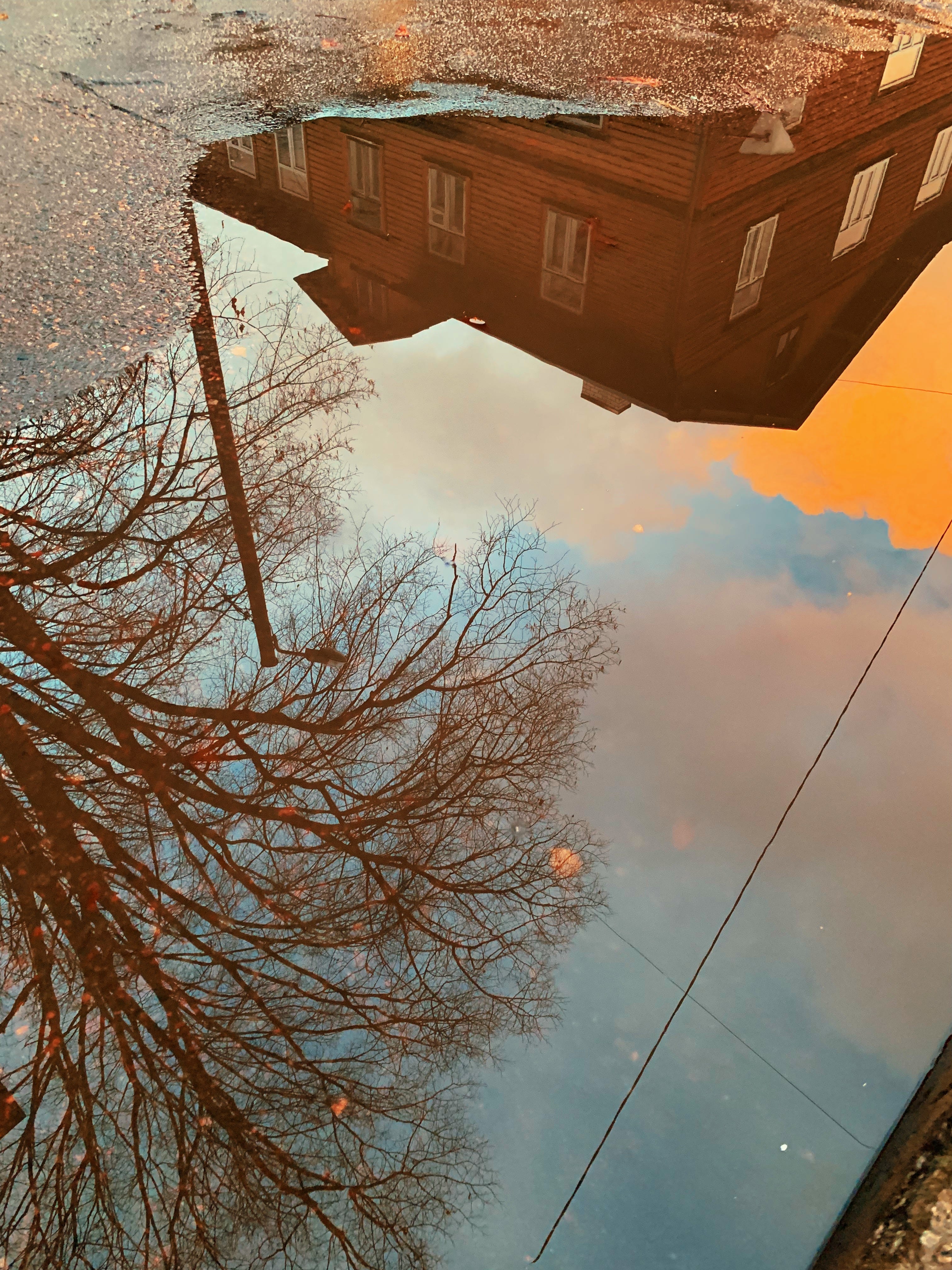
The rest of the time I would entertain myself observing my recurring thoughts as I smoked out of the window, the days slowly slipping away from me. The window was one of those Victorian ones that open by sliding the bottom shutter upwards, but the pulley must have been stuck or the cord broken because it wouldn’t stay up. As I was living in a fourth floor flat without a lift and I was a heavy smoker, instead of going down to the street below I would force open the window and prop it up with a stick about two palms’ width long. I’d then lean my top half out and smoke there, with my stomach pressed against the rail, my thighs burnt from the radiator, my breasts stiff from the cold and with the knowledge that at any time the stick could snap, and the shutter would split me into two identical halves.
My flat was cheap because it was in an abysmal state. The humidity was causing the wallpaper to peel off and the carpet that covered from corner to corner smelt mouldy, like a rotten lemon. Even so, I could still only afford it by subletting, and I shared it with a young foreign couple. Every night I would see the woman, who was a biology teacher but worked as a cleaner, kneading pierogi in the kitchen and she would talk to me about her aspirations of saving enough money to build a house in her hometown. With her eyes fixed on me, I would begin to notice my hinges creaking and so I would nod with a smile, grab my dinner and run off to hide.
I suspected the couple were rehearsing for parenthood because they had a pet: a ferret called Bestia. I must have smelt strange to him because he would constantly scratch at my door with his needle-like claws. Upon hearing his frantic scrabbling on the wood, his owners would yell:
“Nie wolno!” which means “You’re not allowed!”
If I ever left my room at night to go to the toilet or drink water, Bestia would lunge at my ankles and sink his sharp little teeth into my flesh.
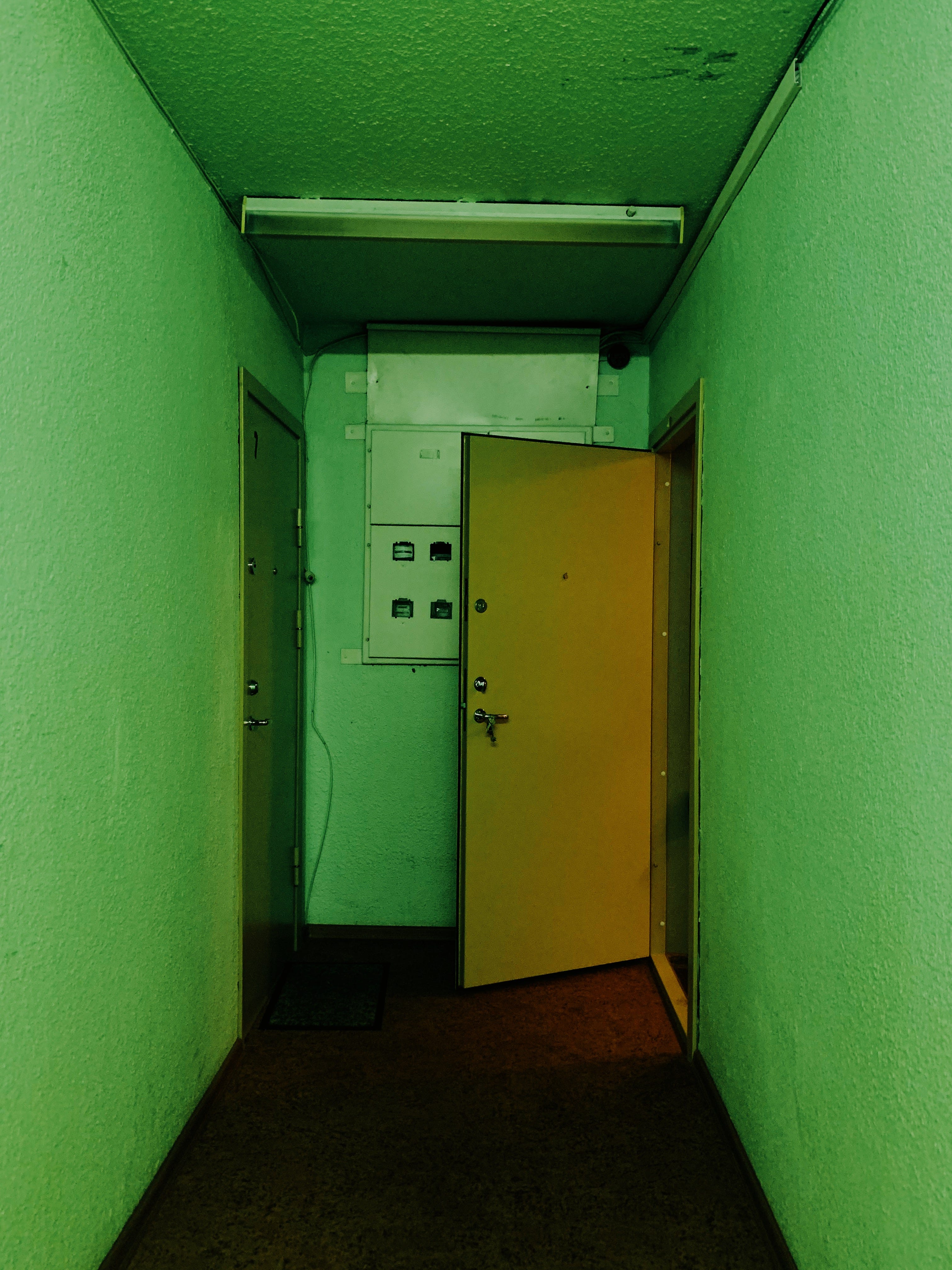
In the mornings I’d go to the job centre and sit in lavender blue seats. The tops of the tables were a pastel blue and the carpet was indigo with beige specks, which matched the cream-coloured walls. I pictured the interior designers deciding the colour palette by Googling “the colour of emotions” and Google’s response “[...] according to colour psychology, blue is associated with feelings of serenity, calm and trust.” Convinced of the positive impact of their colour choice on the professionally unstable, I imagined them nodding in satisfaction. When my turn came, I would check the offers of the day. I knew that, if selected, I would surely be unable to keep it together, but I would go anyway and drag my finger across the greasy screen until I had gone through the entire list. I would then walk to the park and sit on my usual bench.
One day a staff member came up to me while I was waiting in line for the computers and gestured for me to follow her to a small room with glass walls. She said they had noticed that I was a regular visitor and wanted to help me input my CV into the system to improve the service. I answered her questions as well as I could, trying to choose the right words to avoid falling apart. It didn’t work. My top lip quivered and within seconds the split had ripped me in half until the employee was in my blind spot. She quickly —but politely— said goodbye and advised me to come back later. As soon as the fresh air outside had put me back together, I knew that I’d never be able to go back to that place.
I decided that the only solution was to stretch out time by cutting back on my spending. My diet consisted of whatever I could find in the reduced section in Lidl, and I’d spend my days drifting around aimlessly. I would go to the river or the canal when it wasn’t raining; the rest of the time I’d go to a museum or the university café, where I could sit down without having to buy anything. I would sometimes take part in studies I’d find on bulletin boards that didn’t require native speakers: completing sequences on a screen, reacting to sounds while a CT scan was performed on me, reading passages of text in foreign languages and selecting the ones that made the most sense. They didn’t pay me much, but I barely had to talk to anyone, and I could do it without splitting. Then I saw it, among the papers on the board. It said something like “Disabled woman looking for help with household chores. No previous experience required.”
I found myself wondering if she were a young tuberculosis sufferer or a polio survivor, condemned to move by dragging her legs across the floor. I imagined Heidi’s Klara Seseman, ghostly white from the vitamin D deficiency and deprived of goat’s milk, locked away in the family mansion and drinking cod liver oil by the spoonful. I imagined someone so pathetic that would, by contrast, make me look radiant. I’d be able at least to examine her and then return home, knowing that there are people lonelier, sadder and worse off than me. I was surprised when I called and a foreign voice just like mine, but with a much more refined pronunciation, gave me an appointment.
My doubts gnawed away at my stomach as I reached the front door. I wanted to turn around and run away but I’ve never been brave enough to back down, so I rang the doorbell. The person who, I assumed, I’d spoken to on the phone answered the door. She was an unfriendly looking young woman about a head and a half taller than me. She directed me towards the dining room and then left us alone.
“Miss Sesemann” was in fact a fifty-something year old woman in an electric wheelchair. Her limbs were gaunt while her belly and hips were swollen and soft, which gave her a pear-shaped form. Without realising, I stared at her with curiosity: her feet were stuffed into tiny ballet shoes; her knee-length skirt was smoothly tucked under her thighs with perfection. Her right arm rested motionless on her lap, while the other, bent at the elbow, swung back and forth, her hand curled up into a claw. When I finally met her gaze, a look of contempt awaited me.
“Are you done now?” She asked me in English. I felt a wave of embarrassment.
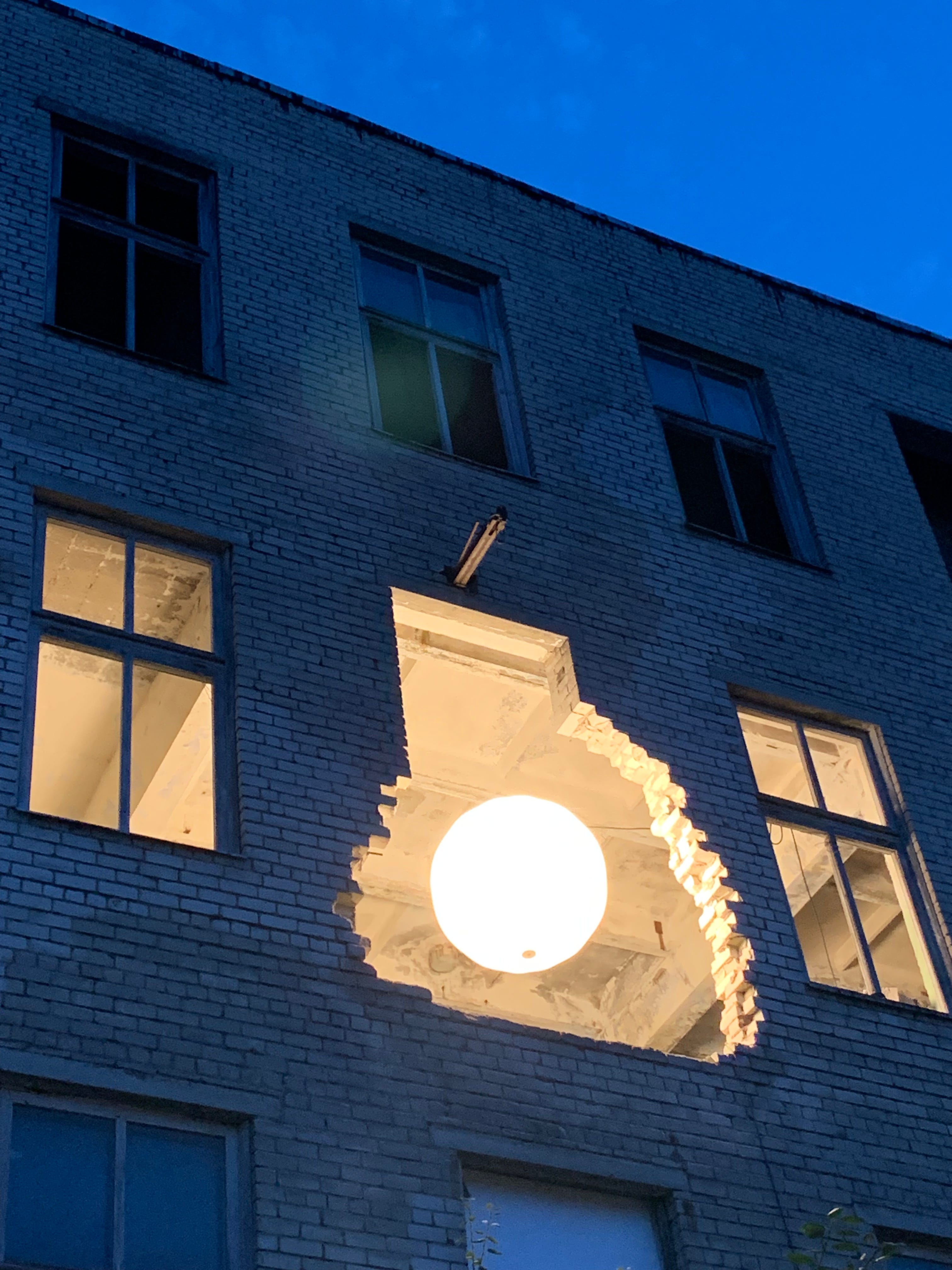
The rest is a blur. I answered her questions, followed her wheelchair around the house and kept my mouth shut when it was my turn to speak. But I managed to stay in one piece and left having gained a job.
Over the months that followed I devoted myself to learning the ropes. I learned the importance of reading her signs. A huff means that the tea is cold, or too milky. Her knees sticking out of the chair means that her body has shifted like a tectonic plate. If her lips turn blue, shower time is over, and I bury her in towels. A quick, sharp breath means I need to loosen the harness that manoeuvres her into bed. A bulge in her thigh area means it’s time to empty out the catheter.
In the solitude of the bathroom, we experience an intimate moment. I attach the tube to the nozzle of the drainage bag connected to her urethra and open the orange plastic valve so that the warm liquid fills the new container. She presses her lifeless hand against her synthetic bladder to help drain it
completely and once it’s empty I put it back together with my hands, making sure it’s sealed again.
Her howls mean “Nie wolno!”
Being at her side means staying alert, which stops me from fracturing. If she ever senses I’m about to fall apart, she pinches me, and I’m back together again. Since I’ve become an appendage of her broken body, I feel whole.
The day I turned twenty-nine I packed up my things and came to live here. Before shutting my suitcase, I tucked the stick from the Victorian window inside, to have a souvenir of my time in that flat. I hugged my flatmate
goodbye, wishing her the best in her aspirations, and I left. For a brief moment, I could still hear Bestia’s claws scratching against the front door as I walked down the stairs towards the street below.